How does a ground screw work?
As a dedicated supplier of ground screws, I’ve witnessed firsthand the transformative power of these remarkable foundations. Ground screws, often overlooked in the grand scheme of construction and infrastructure, are unsung heroes that offer a multitude of advantages over traditional foundation methods. In this blog post, I’ll delve into the mechanics of how ground screws work, explore their applications, and discuss why they’re an excellent choice for a wide range of projects. Ground Screw
Understanding Ground Screws: A Brief Overview
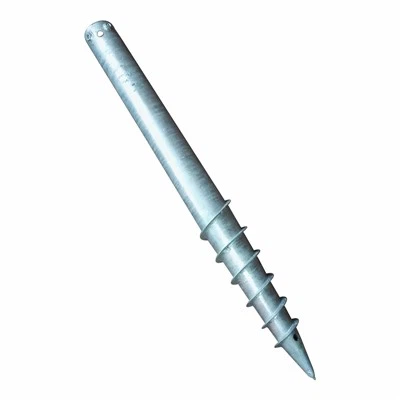
Ground screws, also known as screw piles or helical piles, are deep foundation elements that provide structural support by being screwed into the ground. They consist of steel shafts with helical plates welded along their length, resembling large screws. These helices act as anchors, providing resistance against vertical and lateral loads. Ground screws come in various sizes, shapes, and configurations to suit different soil conditions and project requirements.
The Installation Process
One of the most significant advantages of ground screws is their ease and speed of installation. Unlike traditional foundation methods, which often require extensive excavation, pouring of concrete, and waiting for it to cure, ground screws can be installed quickly and with minimal disturbance to the surrounding environment. Here’s a step-by-step breakdown of the installation process:
Site Preparation
Before installation begins, the site must be cleared of any debris, vegetation, or obstacles. The ground surface should be leveled to ensure proper alignment and installation of the ground screws. In some cases, a geotechnical investigation may be required to determine the soil conditions and the appropriate type and size of ground screws to be used.
Marking the Installation Points
The next step is to mark the locations where the ground screws will be installed. This is typically done using a layout plan or a GPS system. The spacing between the ground screws will depend on the load requirements of the structure and the soil conditions.
Installation of the Ground Screws
Once the installation points are marked, the ground screws are installed using a specialized hydraulic or mechanical screwing machine. The machine applies a rotational force to the ground screw, causing it to penetrate the soil. As the ground screw is screwed into the ground, the helical plates displace the soil, creating a tight fit and providing resistance against vertical and lateral loads.
The installation process is monitored closely to ensure that the ground screws are installed to the correct depth and angle. The depth of installation will depend on the load requirements of the structure and the soil conditions. In general, ground screws are installed to a depth where they can achieve the required bearing capacity and resistance against uplift.
Connection to the Structure
After the ground screws are installed, they are connected to the structure using a variety of methods, such as brackets, bolts, or welding. The connection must be designed to transfer the loads from the structure to the ground screws effectively.
How Ground Screws Work: The Mechanics
Ground screws work by transferring the loads from the structure to the surrounding soil through the helical plates. When a load is applied to the structure, the ground screws resist the load by developing friction and bearing resistance along the length of the shaft and the helical plates.
Friction Resistance
Friction resistance is the resistance developed between the surface of the ground screw shaft and the surrounding soil. As the ground screw is screwed into the soil, the soil particles are compressed against the shaft, creating a frictional force that resists the movement of the ground screw. The amount of friction resistance depends on several factors, including the diameter and surface roughness of the shaft, the soil type and density, and the depth of installation.
Bearing Resistance
Bearing resistance is the resistance developed by the helical plates against the soil. As the ground screw is screwed into the soil, the helical plates displace the soil, creating a bearing surface. The bearing surface provides resistance against the vertical and lateral loads applied to the structure. The amount of bearing resistance depends on several factors, including the size and shape of the helical plates, the soil type and density, and the depth of installation.
In addition to friction and bearing resistance, ground screws also provide resistance against uplift forces. Uplift forces can occur due to wind, water, or seismic activity. The helical plates of the ground screw act as anchors, providing resistance against the upward movement of the structure.
Applications of Ground Screws
Ground screws are a versatile foundation solution that can be used in a wide range of applications, including:
Residential Construction
Ground screws are an excellent choice for residential construction, particularly for homes built on sloped or uneven terrain. They can be used to support foundations, decks, porches, and other structures. Ground screws offer several advantages over traditional foundation methods, including faster installation, lower cost, and minimal disturbance to the surrounding environment.
Commercial Construction
Ground screws are also commonly used in commercial construction, such as office buildings, warehouses, and retail stores. They can be used to support foundations, columns, and other structural elements. Ground screws offer a cost-effective and efficient foundation solution for commercial projects, particularly in areas with poor soil conditions.
Renewable Energy Projects
Ground screws are increasingly being used in renewable energy projects, such as solar farms and wind turbines. They can be used to support the foundations of solar panels and wind turbine towers. Ground screws offer several advantages over traditional foundation methods, including faster installation, lower cost, and minimal environmental impact.
Temporary Structures
Ground screws are an ideal foundation solution for temporary structures, such as event tents, stages, and exhibition stands. They can be installed quickly and easily, and they can be removed and reused at a later date. Ground screws offer a cost-effective and flexible foundation solution for temporary structures.
Advantages of Ground Screws
Ground screws offer several advantages over traditional foundation methods, including:
Speed of Installation
Ground screws can be installed quickly and easily, typically in a fraction of the time required for traditional foundation methods. This can result in significant cost savings and reduced project timelines.
Cost-Effective
Ground screws are a cost-effective foundation solution, particularly for small to medium-sized projects. They require less excavation, less concrete, and less labor than traditional foundation methods, resulting in lower overall costs.
Minimal Environmental Impact
Ground screws have a minimal environmental impact compared to traditional foundation methods. They require less excavation, which reduces the amount of soil disturbance and the potential for soil erosion. They also do not require the use of concrete, which reduces the carbon footprint of the project.
Versatility
Ground screws are a versatile foundation solution that can be used in a wide range of applications and soil conditions. They can be used to support structures on sloped or uneven terrain, in areas with poor soil conditions, and in areas with high water tables.
Reusability
Ground screws can be removed and reused at a later date, making them an environmentally friendly and cost-effective foundation solution for temporary structures.
Conclusion

Ground screws are a remarkable foundation solution that offers a multitude of advantages over traditional foundation methods. They are easy and quick to install, cost-effective, environmentally friendly, and versatile. Whether you’re building a residential home, a commercial building, a renewable energy project, or a temporary structure, ground screws are an excellent choice for your foundation needs.
Sod Staple If you’re interested in learning more about ground screws or if you have a project that requires a reliable and cost-effective foundation solution, I encourage you to contact me for a consultation. I’d be happy to discuss your project requirements and recommend the best ground screw solution for your needs.
References
- Tomlinson, M. J. (2001). Foundation design and construction. Pearson Education.
- Coduto, D. P., Kitch, J. R., & Duncan, J. M. (2017). Geotechnical engineering: principles and practices. Wiley.
- FHWA. (2008). Helical pile foundations: design and installation guidelines. Federal Highway Administration.
Hebei Goldfinch Import And Export Trade Co., Ltd.
As one of the most experienced ground screw manufacturers and suppliers in China, we offer a wide range of products with superior quality. Please feel free to wholesale customized ground screw made in China here from our factory. Contact us for more details.
Address: No. 3 Shanglanting, Tayuanzhuang, Zhengding County, Shijiazhuang City, Hebei Province
E-mail: goldfinchmetal@outlook.com
WebSite: https://www.hbgoldfinchmetal.com/
