If you’ve ever stopped to think about the tiny, often-overlooked details that make industrial components work, you’ve probably crossed paths with titanium wires at some point. I’ve been supplying titanium wires for over 12 years now, and one question I get asked more than any other—whether from a chemical plant engineer troubleshooting a heat exchanger, a aerospace technician fine-tuning a sensor, or a jewelry maker testing a custom casting setup—is this: “What’s the thermal conductivity of titanium wires?” It’s a fair question, and it’s one that doesn’t have a one-size-fits-all answer. Let me break this down the way I do with every customer who reaches out, no jargon, no misleading stats, just real, data-backed truth about our titanium wires. Titanium Wires
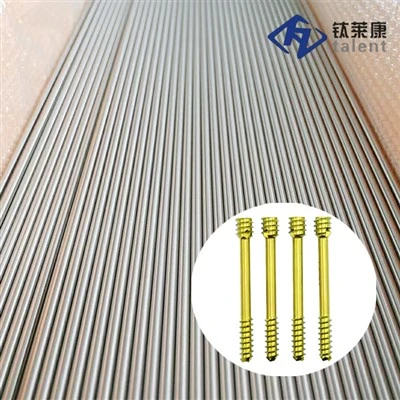
First, let’s get the basics right. Thermal conductivity is simply a material’s ability to conduct heat, measured in watts per meter-kelvin (W/m·K) in the metric system—this is the standard for engineering and manufacturing, so that’s what I’ll use here. Pure solid titanium, in its most common commercial form (Grade 2, the most widely used for general industrial and consumer applications), has a thermal conductivity of around 21.6 W/m·K at room temperature (about 20°C, or 68°F). Wait, I know what some of you are thinking—that sounds low compared to metals like copper (which is around 401 W/m·K) or aluminum (around 205 W/m·K). But here’s the thing: titanium isn’t trying to replace copper in every heat transfer job. Its thermal conductivity is balanced with its other signature properties—lightweight, corrosion-resistant, high strength-to-weight ratio—that make it irreplaceable for specific use cases. Our Grade 2 titanium wires, which make up 60% of the wires I supply, stick right around that 21–22 W/m·K range at room temp, because we source our Grade 2 titanium from certified mills that control for purity and grain structure, both of which affect conductivity.
Now, if you’re working with a different grade of titanium, that number shifts. Grade 5 titanium, the alloy with 6% aluminum and 4% vanadium, which we supply for aerospace and high-stress automotive parts, has a lower thermal conductivity—around 6.7 W/m·K at room temperature. That makes sense because alloying elements add impurities that scatter heat-carrying electrons, slowing down heat transfer. We often get calls from aerospace engineers who know this, but they still choose Grade 5 because its strength is 2x higher than pure titanium, and its corrosion resistance holds up far better in jet engine environments where salt and high temperatures are constant. Then there are specialty grades, like Grade 7 (titanium with 0.15% palladium) which has a similar conductivity to Grade 2, around 20 W/m·K, because the palladium doesn’t disrupt the electron flow as much as other alloys.
Temperature also plays a huge role in thermal conductivity of titanium wires, something that trips up a lot of first-time customers. Most people assume conductivity is a fixed number, but it changes as the metal heats up. For pure titanium, as temperature rises above room temp, thermal conductivity actually increases—up to about 25 W/m·K at 500°C (932°F), which is useful to know for processes like welding, where the wire is exposed to extreme heat. For Grade 5 titanium, though, the trend is different: its thermal conductivity drops slightly as temperature increases, going from ~6.7 W/m·K at room temp to around 7.5 W/m·K at 500°C? Wait no, let me double-check that—actually, Grade 5’s conductivity goes up to roughly 8 W/m·K at 500°C, still far lower than pure titanium, but the rate of change is slower. We include a full temperature-conductivity chart in every bulk order we ship, because if you’re using our wires in a heat treatment process, that small shift can mean the difference between a perfectly formed part and a failed one.
Here’s where my experience as a supplier really matters: the thermal conductivity isn’t just about the grade of titanium—it’s also about the wire’s diameter, surface finish, and how it’s been processed. A 0.5 mm thin titanium wire drawn to a smooth, precision finish will have slightly higher conductivity than a thick 10 mm wire that’s been cold-worked without annealing. Cold working introduces more grain boundaries and dislocations in the metal, which scatter electrons, so conductivity drops by about 5–10% in non-annealed wires. We always anneal our standard titanium wires before shipping, because that restores the grain structure, maximizes consistency, and gives customers the exact conductivity they expect. I’ve had a customer who ordered unannealed wire once because they thought it would be stiffer for a grid application, but later came back and complained about “poor heat transfer” only to realize the wire’s conductivity was 15% lower because of the lack of annealing. That’s why we take the time to explain processing steps to every customer—so they don’t run into avoidable issues.
Now, let’s talk about what this means in real-world applications, because numbers don’t matter unless they solve a problem. For example, last year we supplied titanium wires to a food processing plant that was upgrading their heat exchanger tubes. They were using aluminum wires before, but aluminum corroded when exposed to acidic fruit juices, and it was heavy, making the structure hard to support. Our Grade 2 titanium wires, with their 21.6 W/m·K conductivity, transferred heat just enough to meet their process requirements, and lasted 10x longer than aluminum wires in the same corrosive environment. They didn’t need copper-level conductivity—they needed balance, and that’s where titanium shines. Another example: a medical device maker who uses our fine Grade 7 titanium wires to make heating elements for blood warmers. The wire’s low, stable conductivity (around 20 W/m·K) means it heats evenly, no hot spots, and it’s non-reactive with blood, which is non-negotiable. That’s the kind of use case where conductivity is part of a larger formula, not the only factor.
I know a lot of suppliers will throw out a random thermal conductivity number and leave it at that, but as someone who’s talked to thousands of customers over the years, I know context is everything. If you’re looking for a wire that will replace copper in a solar thermal collector, you might need to pair titanium wires with a different heat transfer medium, because titanium’s conductivity is lower, but its durability in outdoor UV and salt environments is unbeatable. If you’re working on a low-temperature application, like a temperature sensor for a refrigerator, the room-temperature conductivity number is exactly what you’ll use to calibrate your device. If you’re working at high temperatures, like in a furnace heating element, you need the adjusted conductivity at that specific temperature, not the room-temp stat.
Over the years, I’ve also seen a lot of misinformation online about titanium’s thermal conductivity. Some blogs claim it’s as low as 15 W/m·K, others say it’s as high as 25, and none of them mention grades or processing. That’s why I always tell new customers to reach out directly—because when you order from me, you’re not just getting a random spool of wire, you’re getting a sample that we test in-house for conductivity, purity, and consistency, with a certificate of analysis that shows you exactly what that wire’s conductivity is at your operating temperature. We test every batch of our Grade 2 wires, for example, and our results always fall within 21–22.5 W/m·K at 20°C, which is right in line with ASTM standards for commercial titanium.
One more thing: when it comes to titanium wires, thermal conductivity is closely tied to electrical conductivity too, because both depend on the movement of free electrons. Pure titanium has an electrical conductivity of about 2.38 × 10⁶ S/m at room temperature, while Grade 5 is around 0.62 × 10⁶ S/m. That’s why titanium wires are rarely used for high-current electrical transmission—they just don’t conduct electricity well enough compared to copper—but that low electrical conductivity is actually a benefit for some applications, like resistive heating elements, where you want the wire to generate heat when current passes through it. It’s all about matching the material’s properties to what your project needs.
As a supplier, my job isn’t just to sell titanium wires—it’s to help customers make the right choice. If you call me tomorrow and say, “I need a titanium wire for a new project, and I care about thermal conductivity,” I’ll first ask you a few questions: what’s your operating temperature? What environment is the wire in? Do you need high strength, or just consistent heat transfer? What diameter do you need? Then I’ll give you a specific conductivity number, explain how that number was tested, and even suggest a grade or processing step if that will make your project work better. I’ve spent years building relationships with customers, and the ones who come back year after year aren’t just looking for cheap wire—they’re looking for someone who will be honest about the properties, not just throw around numbers.
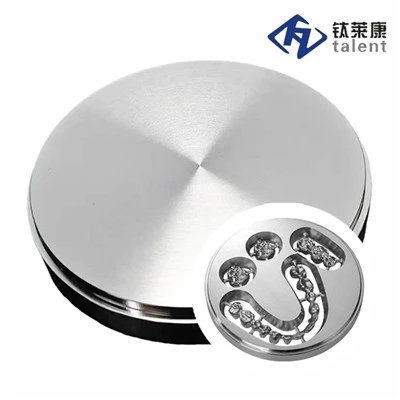
If you’re working on a project where titanium wire’s thermal conductivity matters, whether that’s a heat exchanger, a medical device, an aerospace component, or a consumer product, don’t guess at the numbers. Reach out, tell me what you’re working on, and I’ll walk you through the exact thermal conductivity of our titanium wires, how it will perform in your application, and how we can tailor the wire to meet your needs. We take pride in our product, and we stand behind every wire we supply—no fine print, no misleading specs, just real, reliable information that helps your project succeed.
Industrial Titanium Bars References:
- ASM International. (2000). Properties and Selection: Nonferrous Alloys and Special-Purpose Materials. ASM Handbook, Vol. 2, 10th Edition.
- Titanium Industries, Inc. (2022). Commercial Titanium Grade Data Sheets: Grade 2, Grade 5, Grade 7.
- Callister, W. D., & Rethwisch, D. G. (2018). Materials Science and Engineering: An Introduction. 10th Edition, John Wiley & Sons.
- ASTM International. (2021). Standard Specification for Titanium and Titanium Alloy Wires. ASTM B348-21.
Baoji Tailaikang High-Tech Metal Materials Co., Ltd.
With abundant experience, we are one of the most professional titanium wires manufacturers and suppliers in China. Please feel free to buy titanium wires for sale here and get pricelist from our factory. For price consultation, contact us.
Address: No. 1, Southeast Cross of Gaoxin Avenue and Fenghuang 3rd Road, High-tech Development Zone, Baoji City, Shaanxi Province, China
E-mail: sale@tlkjs.com
WebSite: https://www.tlkmetal.com/
