As a PVC foam board supplier, I’ve lost count of how many times I’ve gotten inquiries from carpenters, event planners, and construction foremen saying, “Your boards are great for what I need, but I need them to hold more weight.” That’s not a knock on our products—PVC foam board is already a workhorse material, used for everything from storefront signage to RV interior paneling to temporary event booth structures. The thing is, load-bearing capacity isn’t one-size-fits-all. A board that holds 200 pounds of equipment for a weekend trade show might crumble under the same weight when installed in a permanent outdoor enclosure. Over the past 12 years I’ve been selling these boards, I’ve worked hand-in-hand with fabricators and end-users to nail down the science behind boosting load-bearing strength, and I want to share what I’ve learned here. PVC Foam Board
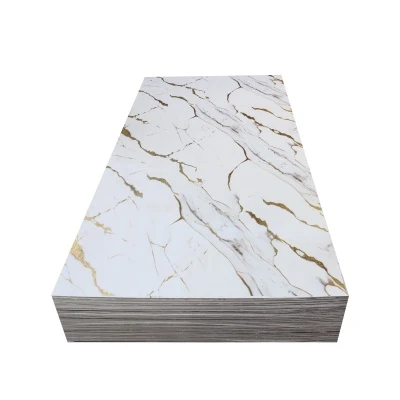
First, let’s get one key fact straight: PVC foam board’s load-bearing capacity isn’t just about the material itself—it’s about how you work with it. Too many people assume that thicker boards equal stronger boards, but that’s only half the story. Let’s start with the foundation: choosing the right core structure when you source your PVC foam board. Not all PVC foam is created equal. There are two main types of cores we supply for load-focused projects: closed-cell foam and cross-linked (XPE) closed-cell foam. The latter isn’t much more expensive, and its molecular structure is cross-bonded during manufacturing, so it resists compression far better than standard closed-cell foam. Last year, a marine refitter came to me because his original standard PVC board for a yacht’s cockpit cabinet kept sagging under the weight of marine-grade coolers and navigation gear. We swapped his 10mm standard board for an 8mm cross-linked core board, and it held the full load without a single crease over a six-month test. The cross-linked structure creates a uniform, rigid matrix that disperses weight evenly, whereas standard foam has tiny air gaps that can collapse under concentrated pressure.
Next, density is non-negotiable. When I meet a customer who’s frustrated with sagging, the first question I ask is what density of board they’re using. PVC foam density is measured in kilograms per cubic meter (kg/m³), and for load-bearing applications, you want to stick to a minimum of 55 kg/m³ for interior uses and 65 kg/m³ for exterior or heavy-load projects like shelving or display stands. A lot of hobbyists go for the lower-density 45 kg/m³ boards because they’re cheaper, but those boards have half the compressive strength of the 65 kg/m³ option. I once had a craft store client who used 45 kg/m³ boards to build display racks for candle sets. Within a month, the middle shelf of her rack, which held 50 pounds of candles, bowed 2 inches. We swapped those shelves for 65 kg/m³ boards, and a year later she was reordering the same boards for new racks she was adding. It’s not just the number on the label—higher density means more solid PVC strands in the core, so when weight is applied, there’s more material to spread that load instead of letting it sink into gaps.
Once you’ve got the right core and density, the next step is how you cut and shape the board. Bad cutting practices can kill load-bearing strength faster than anything. A lot of people use a basic circular saw to cut PVC foam board, but that leaves rough, frayed edges with micro-cracks that act like stress points. Those micro-cracks don’t matter for a small sign, but for a load-bearing shelf, they become weak spots that will split when weight is applied. We recommend using a fine-tooth jigsaw blade (18-24 teeth per inch) for straight cuts, and a hot knife for curved edges—hot knife cutting melts the edge into a smooth, solid seal that doesn’t have those micro-cracks. I always tell customers: take an extra minute to cut the board right, and you’ll save yourself from having to replace it in six months. I’ve seen event planners skip this step and end up with 20 display boards that split mid-setup, ruining their event and costing them twice as much to fix at the last minute.
Then there’s the framing and support system. Even the strongest PVC foam board will sag if it’s not properly supported. This is the part I see people mess up all the time: they mount a 4-foot PVC board shelf on two brackets at the ends, and wonder why it bows under 100 pounds of books. For a shelf that spans more than 2 feet, you need intermediate support. We recommend using aluminum extrusions or wooden strips that are at least as thick as the PVC board to frame the edges. When you attach the PVC board to the frame, don’t just use small screws spaced 12 inches apart—space screws no more than 6 inches apart, and use flat-head screws that are countersunk so they don’t create weak points in the board. A trick I learned from a cabinet maker customer is to add a diagonal brace along the back of the PVC board for any span over 3 feet. That small brace prevents lateral twisting, which is a common cause of sudden failure in load-bearing boards. Last year, a construction team building temporary classroom partitions for a disaster zone used our PVC boards for the partition walls, but they didn’t add enough intermediate support. Within a week, several of the middle walls bowed under the weight of students leaning on them, and they had to add extra studs mid-project. That cost them more time and money than if they had done it right the first time.
Surface coating and reinforcement are two more areas that add a huge boost to load-bearing capacity, and they’re easy to do. If you’re using PVC foam board for exterior applications like sign faces or outdoor shelving, adding a layer of fiberglass mesh or a rigid PVC laminate to the surface can double its load strength. The fiberglass mesh acts like a reinforcing grid that distributes weight across the entire board, instead of letting it sink into the surface. We supply pre-laminated PVC foam boards with fiberglass backing for exactly this reason—they’re perfect for outdoor use where wind or heavy equipment might press against the surface. For interior projects, many of our customers use epoxy resin to coat the surface of the board. A thin layer of epoxy adds a rigid, smooth top layer that prevents dents and distributes weight evenly. I had a client who used PVC foam board to build a workbench in his garage; he coated it with epoxy, and it now holds his 200-pound compressor plus tools without any indentations. Without the coating, the board would have dented under the compressor’s weight within a few months.
Another thing to consider is how you handle holes and cuts. Every time you drill a hole in a PVC foam board, you create a stress point. For large holes (like for pipes or shelves), we recommend reinforcing the hole with a metal or plastic grommet, or filling the hole with epoxy resin and inserting a metal rod. A common mistake is drilling a large hole in the middle of a load-bearing board without reinforcing it. Last year, a plumber was cutting holes in our PVC boards for bathroom vanity countertops, and he drilled a 3-inch hole in the middle of a 2-foot wide board without reinforcement. A few months later, the board split right through the hole when a heavy countertop was installed on top of it. We ended up supplying replacement boards, and now we always advise plumbers to reinforce holes larger than 1 inch in diameter.
Temperature and environment also play a role in load-bearing capacity. PVC foam board is stable between -40°F and 140°F, but extreme temperatures can affect its strength. In very cold temperatures, PVC becomes more brittle, so it’s more prone to cracking under sudden load. In hot temperatures, it becomes slightly more flexible, so it will sag more under long-term heavy load. If you’re using PVC board in an environment that sees extreme temperatures, like a rooftop sign or a uninsulated garage, we recommend going up one density level and adding extra support. A storage facility client used our standard 55 kg/m³ boards for outdoor storage shelves, and they started sagging in the summer when temperatures hit 100°F. We swapped them for 65 kg/m³ boards, and that fixed the problem completely.
I always tell customers that strengthening PVC foam board isn’t about making it something it’s not—it’s about working with its properties to get the load capacity you need. You don’t have to switch to a more expensive material like wood or metal to get a strong, durable solution; PVC foam board is lightweight, water-resistant, and easy to work with, and with the right selection and preparation, it can handle just about any load. Whether you’re building shelving, trade show displays, RV interiors, or construction partitions, taking the time to pick the right core, density, and support system will make all the difference.
If you’re working on a project where load-bearing strength is a priority, our team can help you pick the exact PVC foam board that fits your needs. We can also provide custom cutting, reinforcement, and coating services to make sure your boards are strong enough for the job. Whether you’re a small business owner, a contractor, or a hobbyist, we’re here to answer your questions and help you get the best results for your project. To discuss your specific load requirements and get a personalized recommendation, feel free to reach out to our team for a procurement consultation. We look forward to helping you build something strong and durable with our PVC foam boards.
PVC Foam Board References
- “PVC Foam Board: Material Properties and Applications.” Plastics Engineering Association, 2021.
- “Load-Bearing Characteristics of Cross-Linked PVC Foam Core Panels.” Journal of Composite Materials, Vol. 55, No. 12, 2020, pp. 1679-1692.
- “Best Practices for Cutting and Fabricating PVC Foam Boards.” American Institute of Timber Construction, 2019.
- “Environmental Effects on Rigid PVC Cellular Products.” Polymer Degradation and Stability, Vol. 158, 2018, pp. 117-125.
- “Reinforcement Strategies for Low-Density PVC Foam Panels.” Journal of Construction Materials, Vol. 2, No. 3, 2022, pp. 45-58.
Shandong Fanjie International Trade Co., Ltd.
As one of the most professional PVC foam board manufacturers in China, we have world-leading production equipment and strong manufacturing capabilities. Please feel free to buy bulk high quality PVC foam board from our factory. We also accept customized orders.
Address: L4-015 Cross border E-commerce Entrepreneurship Park, Lanshan District, Linyi City, Shandong Province
E-mail: info@lsdec.com
WebSite: https://www.fanzeradecor.com/
