If you’re in the business of handling condensation vapor recovery equipment, you’ve probably asked yourself this question more than once: Can the gear that’s meant to catch, condense, and reuse lost vapors be controlled from a distance? Let me start by grounding this in what I see every day as a supplier of this exact equipment. I’m not an engineer in an office wearing a lab coat — I’m the guy who loads units into trucks, talks to refinery maintenance crews at 6 a.m., and fields calls from plant managers at 2 a.m. when a system drops offline. So this isn’t just theory. This is the real-world stuff I’ve watched work (and sometimes fail) over the past eight years. Condensation Vapor Recovery Equipment

First, let’s break down what condensation vapor recovery equipment actually does, because that’s the foundation here. These systems aren’t just fancy air filters. They’re designed for facilities that generate volatile organic compounds (VOCs), like oil refineries, chemical plants, bulk gasoline storage terminals, even food processing plants that deal with solvents or volatile ingredients. When those facilities process or store materials, vapors escape — not just to pollute the air, but to lose product, which hits the bottom line hard. Condensation systems work by cooling those vapors until they turn back into a liquid, which is then collected and recycled or sold. The whole point is efficiency, compliance, and cost savings.
Now, early models of this equipment were strictly local. You’d walk to the unit, check pressure gauges, adjust cooling levels, empty the liquid collection tank. If it froze up, you noticed it the next morning when you found ice caked on the condenser coils. If the pump failed, you’d get an alert by the time someone smelled vapors leaking — which meant the plant might be out of compliance with EPA or EU environmental rules, and losing thousands of dollars in product overnight. That’s where remote control comes in, and here’s the truth: most modern condensation vapor recovery equipment absolutely can be remotely controlled. It’s not a “maybe” anymore. It’s a standard feature for 90% of the systems we ship these days.
Let’s get into what remote control actually looks like for this specific gear, because it’s not just logging into a dashboard from your couch. It’s integrated with industrial IoT (IIoT) sensors that are built to withstand the harsh environments where this equipment lives. I’ve had clients put our systems on refinery rooftops where temperatures swing from 20 degrees below zero in winter to 110 in summer, coated in salt or chemical dust, and the sensors still work. These sensors track real-time data: vapor inlet temperature, condenser coil temperature, pressure levels in the lines, liquid collection tank fill rate, pump speed, even power consumption. All that data is sent to a cloud-based platform, or sometimes a local on-site server for facilities that don’t want to use cloud tools.
From there, you can control the unit remotely. Want to adjust the cooling setpoint to match the incoming vapor load, instead of running the cooling at full blast 24/7? You do that from your office, no need to climb a ladder to the unit. If the system detects that the liquid collection tank is 85% full, it can send an alert straight to your phone, and you can trigger a valve to divert the liquid to the storage tank automatically — no one has to drive out to the site to flip a switch. Most importantly, you can troubleshoot without being there. I had a client last year who had a condenser coil that was getting clogged with debris. He got an alert on his dashboard that pressure was spiking, logged into the remote control platform, and adjusted the system’s automated blowdown function to clear the clog, all before the system shut down. If he’d had to wait for a tech to drive 45 minutes to the plant, he would have lost 1,200 gallons of product that day. That’s the kind of money remote control saves.
But here’s the part most sales pages don’t tell you: it’s not just about having the tech. It’s about designing the remote control features to fit your specific use case. A bulk gasoline terminal has a totally different load profile than a specialty chemical plant, so their remote control needs are different. Terminals have trucks coming in and out 24/7, so the vapor load spikes every time a tanker is loaded. The remote system needs to automatically adjust the condenser to handle those spikes without wasting energy. Chemical plants might have very strict temperature controls for certain vapors, so the remote platform needs to let them set custom alerts for specific temperature ranges, not just general ones.
I’ve worked with facilities that tried to add remote control to old, legacy condensation vapor recovery systems by retrofitting third-party sensors, and that’s where a lot of problems pop up. Those retrofits often aren’t integrated with the system’s actual components, so you get bad data, or alerts that fire for no reason, or the remote control won’t adjust the cooling correctly. That’s why when we design our systems, we build the remote control capability into every part of the unit from the start. The sensors are calibrated to match the condenser, the pump, the valve system, so it works as a single unit, not a bunch of parts glued together.
Now, what about the people who say “remote control is too risky for industrial equipment”? I get that. Cybersecurity is a big concern for facilities that handle hazardous materials. If someone hacks into your remote control system and adjusts the cooling to a level that’s too low, you could have vapors that don’t condense, leading to leaks or even dangerous conditions. That’s not a flaw in the technology — that’s a flaw in how it’s set up. We build our remote control systems with multiple layers of security: encrypted data transfer, two-factor authentication for logins, role-based access so only maintenance managers can adjust critical settings, and regular software updates to patch vulnerabilities. We also work with clients to set up their systems so they have local control as a backup. If the internet goes down at the site, the system can run on its local settings, and when the internet comes back up, it syncs all the data automatically. No lost data, no downtime.
Let’s talk about real results, because numbers matter. Last year, I visited a mid-sized chemical plant in the Midwest that upgraded from our old local-only condensation systems to ones with full remote control. Their maintenance team used to spend 15 hours a week driving to check each unit, adjusting settings, emptying tanks. After the upgrade, that time dropped to less than two hours a week. They reported a 12% reduction in energy use because the system only runs cooling when it needs to, not 24/7 at full power. They also had zero compliance violations in 2023, compared to two in 2022 when they missed a vapor leak alert because no one was on-site to check. That’s the value of remote control for this equipment — it’s not just convenience, it’s a direct impact on your bottom line and your environmental responsibility.
Another example: a bulk fuel terminal on the Gulf Coast that had our remote-controlled systems. During hurricane season, access to the site is often limited because of storm damage or safety concerns. Their team was able to monitor and adjust the vapor recovery systems remotely from their office 100 miles inland, so when the storm brought high humidity and unexpected vapor loads, they could keep the systems running at peak efficiency without risking their techs going out in dangerous conditions. After hurricane Ida in 2021, when many local facilities had vapor leaks because their systems failed during the storm, this terminal had zero issues. That’s the kind of benefit you can’t get with local-only control.
Now, what about the limits? It’s not magic. Remote control works best when it’s paired with well-maintained equipment. If your condenser coils are corroded, or your pump is old and inefficient, remote control can only do so much — it can alert you to a problem, but it can’t fix a broken part. Also, not every facility needs full remote control. If you have a small, stationary condensation unit that only runs 8 hours a day in a controlled environment, maybe local control is enough. But for most facilities that operate 24/7, handle high volumes of vapors, or have multiple units spread across a large site, remote control is non-negotiable.
I’ve had clients come to me asking about adding remote control to systems they bought from other suppliers, and the first question I ask is: does that system have the sensors and communication ports built in? A lot of cheaper, entry-level systems don’t, and retrofitting is often more expensive than just buying a system with remote control from the start. That’s why we design every condensation vapor recovery system we sell with remote control as a core feature, not an add-on. We work with each client to customize the remote platform to their needs — whether they want a simple dashboard that shows fill levels and pressure, or a full system that automates adjustments, sends alerts, and integrates with their facility’s overall control system.
At the end of the day, the answer to “Can Condensation Vapor Recovery Equipment be remotely controlled?” is a resounding yes. But it’s not just about the ability to log into a screen. It’s about choosing a system that’s built to work with remote control, with the security, reliability, and features that fit your specific operations. For me, this isn’t just selling equipment. It’s helping clients avoid downtime, save money, stay compliant, and keep their workers safe. I’ve seen too many facilities lose money and face regulatory fines because they stuck with old, local-only systems that couldn’t adapt to modern demands.
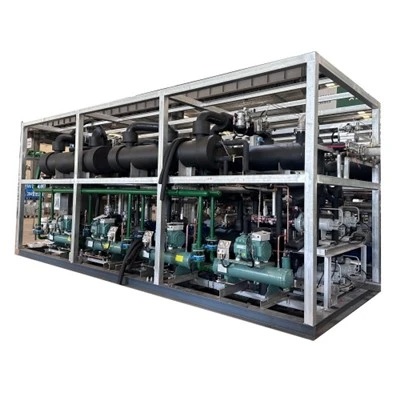
If you’re dealing with condensation vapor recovery and you’re tired of driving to sites at odd hours, missing leaks, or wasting energy on overworked systems, I’d love to talk. We can walk through your specific needs, show you how remote control works for your type of operations, and figure out a solution that fits your budget and goals. You don’t have to run a crew out to every unit to keep things working. Let’s make your vapor recovery system work for you, not against you.
Chemical Plant Vapor Recovery Equipment References
Industrial Vapor Recovery: Technology, Applications, and Compliance. Air & Waste Management Association, 2021.
Industrial IoT for Process Control and Monitoring. International Society of Automation, 2022.
Cybersecurity for Industrial Control Systems: Best Practices for Chemical and Energy Facilities. National Institute of Standards and Technology, 2023.
Shandong Kosman Environmental Technology Co., Ltd.
Shandong Kosman Environmental Technology Co., Ltd. is one of the leading manufacturers and suppliers of condensation vapor recovery equipment in China, featured by quality products and low price. Please rest assured to buy advanced equipment made in China here and get pricelist from our factory. Customized orders are welcome.
Address: No. 5, single-story steel frame structure, Electromechanical Industrial Park, Chengwu County Economic Development Zone, Heze City, Shandong Province
E-mail: keshiman2021@126.com
WebSite: https://www.kosman-vrufactory.com/
