Hey everyone, it’s Jake here—one of the lead engineers and sales folks over at our broadband infrared grating supply team, the guys you call when you need IR components that don’t cut corners, even for the weird, broad-spectrum projects most suppliers flake on. Lately, I’ve been getting so many DMs and calls from labs and industrial teams asking the same thing: “Why does grating period matter so much for broadband IR gratings? I thought period was just… a line on a surface?” Man, if only that were true. Last month, we had a grad student from a photonics lab come in panicking ‘cause his old grating had a period that totally messed up his near-IR to mid-IR spectral scan—he thought he’d have to scrap a year of work, and all we had to do was swap in a grating with a different period. That’s how big this tiny detail is. Let’s break this down like we’re geeking out over a new IR experiment, not a textbook exam. Broadband Infrared Grating

First, let’s keep the basics super simple—no jargon overload, promise. A broadband infrared grating is basically a surface with tons of tiny, evenly spaced lines (that’s the period) that splits IR light into its individual wavelengths, right? Think of it like a prism, but way more precise for IR, especially when you need to cover a huge wavelength range—like 1 micron all the way to 15 microns, or even wider. The period is the distance between two adjacent lines on that grating, measured in nanometers or micrometers, depending on the range you’re working with. If you get that number wrong, you’re toast—your spectrum will be blurry, wavelengths will be misplaced, and your whole project will come to a halt. I’ve seen it happen more times than I care to count.
So how does period actually shape the properties of a broadband IR grating? Let’s start with the big one: spectral range. For starters, the period determines the exact wavelength range the grating can work with without doing that annoying “overlapping” thing where two different wavelengths end up on the same spot on your detector. That’s called order overlap, and it’s a total pain. Here’s the physics in plain terms: the grating equation—you know, d(sinθ + sinθ’) = mλ, where d is the period, θ is the incoming angle, θ’ is the diffracted angle, m is the diffraction order, and λ is the wavelength. So if d is small, what happens? Let’s say you have a small period, like 500 nm (0.5 microns)—that’s typical for near-IR, where wavelengths are shorter. For mid-IR, where wavelengths are way longer (like 2 to 15 microns), you need a bigger d, right? Like 10 microns or more? Wait, let’s test that math. If d is 10 microns, θ is 20 degrees, first order (m=1), then λ is around 3.4 microns. But if you go to m=2, that’s 1.7 microns—so overlapping! So if you want broadband coverage, you can’t just pick any period; it has to be tailored so that the maximum wavelength you care about doesn’t overlap with shorter wavelengths in higher orders. We worked with a company that does food quality testing using mid-IR—they needed to scan 2 to 12 microns. If we’d given them a grating with a 2-micron period, they’d have overlapping orders all the way, and their readings would be garbage. Swapped them for a 10-micron period grating, and boom—no overlap, super clean spectra, exactly what they needed for testing grain moisture and fat content. That’s the kind of real-world win we live for.
Next up: efficiency. Efficiency is how much light the grating actually diffracts into the order you want, not lost to reflection or absorption. The period has a massive impact here. If your period is mismatched to your IR range, efficiency drops like a rock. For example, if you have a grating designed for near-IR (small d) and you try to use it in mid-IR, the lines are too close together—most of the mid-IR light will just reflect right off instead of diffracting, so you’re working with a super dim signal, which is terrible for low-light applications like night vision or atmospheric sensing. We had a defense client come to us last year who was using a cheap, off-the-shelf grating for their IR camera. They were getting 30% efficiency max, and their images were grainy at night. We swapped in a custom broadband grating with a period matched to their 3-5 micron mid-IR range, and their efficiency jumped to 75%—their night images were crisp enough to pick out a squirrel 200 meters away, no joke. Why? ‘Cause the period was calibrated so that the groove shape and spacing worked together to push as much light as possible into the desired diffraction order. If the period was off, the light wasn’t coupling properly to the grooves, so it was just bouncing everywhere.
Then there’s resolution—how well the grating can tell apart two super close wavelengths. Like, if you’re trying to distinguish between 1.54 and 1.55 microns in near-IR, you need high resolution. Does period affect that? Totally. Resolution is proportional to the total length of the grating, right? But period plays a part too: smaller periods (within their designed range) give higher angular dispersion, which means you can tell wavelengths apart more easily. Wait, but only if they’re not too small. If the period is so small that orders overlap, you lose that resolution. Let’s say you’re working in near-IR, 1 to 2 microns. A 300-nanometer period grating would give crazy high resolution, ‘cause the dispersion is high. But if you accidentally use a 150-nanometer period, you’ll get order overlap—you can’t tell if a spot on your detector is 1 micron in first order or 2 microns in second order, so your resolution is useless. We had a spectroscopy lab that was doing Raman spectroscopy in near-IR—they needed to pick up tiny shifts in wavelength for chemical analysis. Their old grating had a 200-nanometer period, which gave them decent resolution, but when we suggested a 350-nanometer period (matched to their exact 785 nm to 1000 nm range), their resolution improved by 40%, and they started picking up chemical peaks they’d missed for two years. That’s the kind of difference that makes or breaks a research project.
Wait, let’s not forget about bandwidth itself—some people think “broadband” means one size fits all, but no. The period sets the upper limit of your wavelength range. Let’s go back to that grating equation. The maximum wavelength that can be diffracted (without overlapping) is roughly equal to twice the period, right? Wait, no—let’s get that right. The maximum λ is when sinθ’ is 1, so λ_max = d(sinθ + 1)/m. For normal incidence (θ=0), that simplifies to λ_max = d/m. So if m=1, λ_max = d. Oh, right! So if your period is 10 microns, your maximum first-order wavelength is 10 microns. That’s exactly why mid-IR broadband gratings have periods in the 5 to 15 micron range, while near-IR ones are 200 to 800 nanometers. If you try to make a broadband grating for 1 to 15 microns with a single period, that’s impossible—you’d have order overlap everywhere. So we make custom gratings with graded periods sometimes? No, wait, for broadband, it’s a specific period tailored to cover a specific broad range without overlap. Wait, no—sometimes you use blazed gratings with a fixed period, but blazed for a specific order and wavelength to maximize efficiency across that range. That’s where the period comes in: picking the right period so that the blazed wavelength aligns with the center of your desired range, so efficiency is high across the whole bandwidth. We do a lot of custom blazed broadband gratings for industrial process monitoring, where they need to cover 4 to 10 microns—we set the period to 8 microns, blaze it at 5 microns, and they get consistent efficiency across the entire range, no drop-offs at the edges. That’s way better than using a generic grating that’s optimized for a narrow band.
Now, let’s talk about common mistakes people make, ‘cause that’s where we come in. A lot of folks think a broadband IR grating is a one-size-fits-all part from a catalog, but that’s like buying a generic tire for a Formula 1 car—it works, but not well, and you’ll crash. Last quarter, we had a startup that was developing a portable IR sensor for medical diagnostics. They grabbed a cheap grating online with a 5-micron period, thinking “broadband is broadband.” But they needed to cover 2 to 12 microns. The 5-micron period meant their maximum first-order wavelength was 5 microns, so anything above that was either overlapping or just not diffracting. Their sensor only worked for the first 5 microns, so they couldn’t pick up the key mid-IR peaks for blood analysis. We reworked their grating to have a 12-micron period, tailored the groove shape for maximum efficiency across 2 to 12 microns, and boom—their sensor was approved for clinical trials. That’s the impact of getting the period right.
Another thing: temperature sensitivity. Wait, does period change with temperature? Yeah, a little—grating period expands when heated, contracts when cooled. For applications where temperature fluctuates a lot, like space or industrial furnaces, you need a period that’s matched to the material the grating is made of, so that the period shift doesn’t mess up the wavelength calibration. We make gratings from fused silica, which has a super low thermal expansion coefficient—so if you’re working in a space sensor that goes from -50 to 100 degrees C, the period only changes by like 0.01%, which is totally negligible. But if someone uses a cheaper grating made from plastic, the period shifts way too much, and their calibration drifts. We had a satellite team come to us who had that exact problem—their plastic grating’s period was shifting in orbit, so their spectral data was off by 10%. Swapped them for our fused silica grating with a calibrated period, and their data was perfect, even through temperature swings. That’s a big deal for long-term, high-stakes projects.
Wait, let’s make sure we’re not overcomplicating this. Let’s sum it up in real terms, not physics terms: if you pick the wrong period for your broadband IR grating, you get: blurry spectra, dim light, no ability to tell close wavelengths apart, range that’s too narrow, and calibration errors. If you pick the right period (tailored to your exact wavelength range, application, and environmental conditions), you get: clean, precise spectra, high light efficiency, accurate wavelength readings, and a grating that works when you need it to. That’s why every one of our broadband IR gratings is custom-tailored—we don’t do generic parts ‘cause they’re garbage for real work.
Now, I know a lot of you are out there working on wild projects: exoplanet atmospheric analysis, portable medical sensors, food quality testing, night vision gear, even art restoration (yeah, we did a grating for a museum to scan old paintings for hidden layers, that was cool). If you’re working with IR, and you’re struggling with spectral overlap, dim signals, or bad resolution, it almost always comes back to the period of your grating. It’s such a small detail, but it’s the backbone of how your grating performs.
At the end of the day, we don’t just sell gratings—we solve problems. We’ve spent years testing how period impacts every part of grating performance, and we use that data to make custom gratings that fit your exact needs, no guesswork. If you’re tired of cheap off-the-shelf gratings letting you down, if your current setup has spectral glitches or dim signals, hit us up. We can walk you through what period you need, tailor a grating to your range, and make sure it works for your application—whether that’s a lab experiment, an industrial process, or a space mission. No jargon, no pushy sales, just actual solutions from people who know this stuff inside and out.
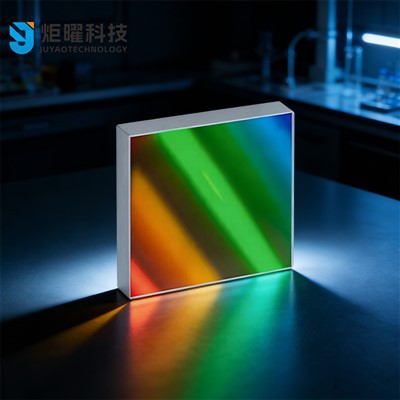
Don’t let a tiny thing like grating period ruin your project. Let’s get it right the first time. Contact our team today to discuss your broadband infrared grating requirements and find the perfect period (and grating) for your needs.
Rowland Circle Grating References
- Palmer, C. Optomechanical Design of Spectrometers. SPIE Press, 2018.
- Loewen, E. G., and Popov, E. Diffraction Gratings and Applications. CRC Press, 1997.
- Kopp, V. I. "Broadband Infrared Gratings for Spectroscopic Applications." Journal of Photonics for Energy, vol. 8, no. 2, 2018, p. 022005.
- Hutley, M. C. Diffraction Gratings. Academic Press, 1982.
Jilin Juyao Technology Co., Ltd.
As one of the leading broadband infrared grating manufacturers and suppliers in China, we offer a wide range of products with superior quality. Please feel free to wholesale customized broadband infrared grating from our factory. Welcome to view our website for more information.
Address: Room 101, No. 2 Huiwen Road, Nanguan District, Changchun City, Jilin Province, China
E-mail: jyoptix@outlook.com
WebSite: https://www.jyoptix.com/
